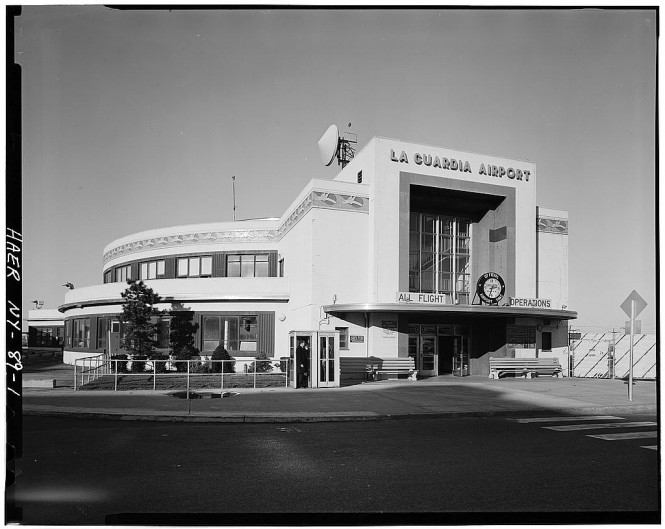
LaGuardia’s Marine Air Terminal was built for the day when a transatlantic airliner could land on water, taxi to a pier and deliver its passengers into an Art Deco rotunda. Opened in 1940 for Pan American Airways’ flying boats, it later became a familiar home for airline shuttles between New York, Boston and Washington. In October 2026, however, the building is between chapters: Terminal A is closed to commercial passengers, and the Port Authority plans to rebuild its boarding facilities while preserving the historic terminal.
The immediate vacancy followed Spirit Airlines’ shutdown in May. JetBlue, which left the Marine Air Terminal in 2022, has since received FAA permission to acquire 22 of Spirit’s LaGuardia takeoff-and-landing slots. Whether and when JetBlue will actually resume flying from Terminal A remains a separate question; the airport’s current Terminal A advisory says there are no commercial flights and the terminal is closed to the public.
How LaGuardia got an airport of its own
Fiorello La Guardia was notoriously unwilling to accept Newark, New Jersey, as a satisfactory answer to a ticket marked New York. In a much-recounted 1930s episode, he protested when his TWA flight landed at Newark and pressed for a flight onward to Floyd Bennett Field in Brooklyn. The stunt illustrated his larger campaign for a major commercial airport inside New York City. Floyd Bennett Field had not won the airline business he hoped for, so the city turned to expanding the former North Beach Airport in Queens.
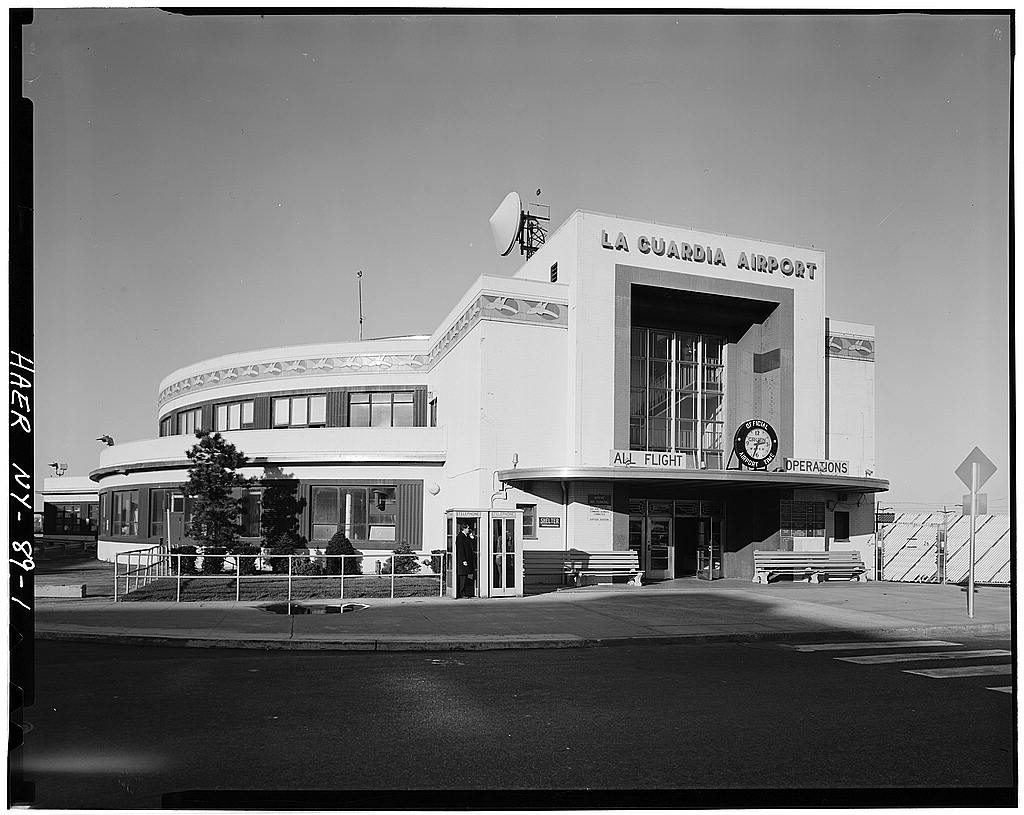
New York Municipal Airport–LaGuardia Field began operations in 1939. The ordinary landplane facilities and the separate waterfront terminal served different kinds of aircraft: Pan Am’s Boeing 314 Clippers needed a protected stretch of water, a dock and a way to move international travelers through customs. William Delano of Delano & Aldrich designed the new Marine Air Terminal with a round central hall, a tall entrance pavilion and wings extending toward the bay. The National Park Service’s history documents the unusual building and its role in the flying-boat era.
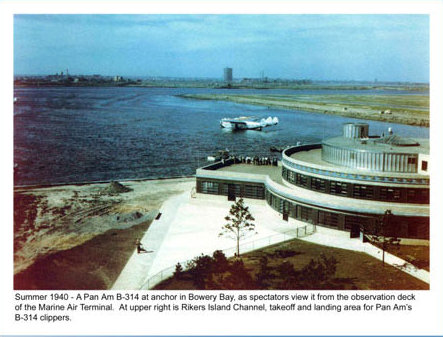
On March 31, 1940, a Clipper departed the newly opened terminal for Lisbon carrying nine passengers, ten crew members and more than 5,000 pounds of mail. The crossing took about 18 and a half hours. The Boeing 314 was a two-deck aircraft with dining and sleeping accommodations, a remarkable proposition at a time when commercial ocean crossings remained the norm. But the era was short: wartime changes and increasingly capable landplanes soon made large flying boats uneconomic, while the opening of Idlewild Airport, now JFK, drew international services away from LaGuardia.
A round room, a remarkable mural and a rooftop deck
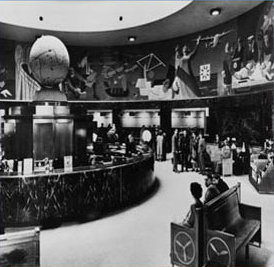
The terminal’s surviving architecture is worth seeing in its own right. Stylized flying fish decorate the exterior; inside, the round hall is wrapped by Flight, James Brooks’ mural tracing the human pursuit of aviation from mythology through modern commercial flight. At approximately 12 feet high and 237 feet long, it gives the modest terminal a sense of scale that its later gate facilities never matched.
The mural was painted over in the early 1950s, then recovered through a preservation effort that led to its restoration and public rededication in 1980. The Marine Air Terminal’s exterior and principal interior received New York City landmark protection in 1980, and the building was added to the National Register of Historic Places in 1982. The central ticket counter of the Clipper era eventually gave way to a bust of Mayor La Guardia; later passenger-routing changes meant many travelers entered through the additions and missed the rotunda entirely. The Pan Am Historical Foundation recounts the mural’s rescue and the terminal’s successive restorations.
The original terminal also had a rooftop observation deck for people who came to watch the airplanes and flying boats. Its history is frequently misstated. The deck closed for security during World War II, but a contemporary New York Times announcement on June 30, 1945, reported its reopening that day. I have not found a reliable record establishing its last day of routine public access, so the wartime closure should not be presented as its permanent closing date.
Both the rotunda and the observation decks are part of the Port Authority’s current preservation commitment. That does not mean the deck is about to reopen to visitors. Preserving the historic spaces and providing public access to them are different decisions, and the airport has not announced a public observation-deck program.
The shuttle years: when you could just show up
After the Clippers disappeared, the building was used for other airline and general-aviation operations. Pan Am brought its New York–Boston–Washington shuttle to the Marine Air Terminal in 1986; Delta acquired Pan Am’s shuttle in 1991 and operated from the building until December 2017. The terminal’s relative isolation from LaGuardia’s larger passenger complexes became part of its appeal for frequent travelers, even when reaching it by road was less convenient.
The old shuttle was a distinctive air-travel product. Eastern’s pioneering shuttle, later sold to Donald Trump and eventually operated by US Airways, famously took passengers without advance reservations and kept extra aircraft available when a scheduled departure filled up. Pan Am’s competing shuttle, and then Delta’s, brought the concept to the Marine Air Terminal. The days of walking up with a ticket and expecting frequent service between Northeast cities seem especially distant when compared with today’s reservation-driven schedules.
We remember buying student shuttle ticket books roughly three decades ago: four carbon-copy-style tickets for $240, good for flights between Boston and LaGuardia. On the Sunday after Thanksgiving, lines of students trying to get back for Monday classes could snake past Brooks’ murals and out the door. There were free newspapers and magazines, drinks and a level of flexibility that made the shuttle feel unusually civilized. Our original account of the terminal was written with those memories very much in mind.
In 2009, Delta and US Airways proposed an exchange of LaGuardia and Washington-area assets that would have put the US Airways Shuttle into the Marine Air Terminal. We covered the proposed swap at the time and hoped the building might someday accommodate several smaller carriers. The particular terminal swap never happened: Delta remained for another eight years before moving its flights elsewhere in LaGuardia.
JetBlue, Spirit and the end of passenger service in 2026
JetBlue and Alaska Airlines moved into Terminal A after Delta left. Alaska’s LaGuardia service ended the following year, while JetBlue renovated and used the building for flights including Boston. Spirit later joined JetBlue. As LaGuardia’s new Terminal B opened, JetBlue moved most of its operation there in 2021, and the final Boston flights followed on July 9, 2022. By the time Spirit shut down, it had become Terminal A’s last scheduled commercial airline.
The FAA’s October 8, 2026 decision allows JetBlue to acquire 22 former Spirit slots at LaGuardia, subject to a restriction against leasing or trading them to another airline until after April 2028. The FAA also granted relief from slot-usage requirements through April 2027, giving JetBlue time to address operational arrangements. Slots are permissions for takeoffs and landings, however, and the approval alone does not tell passengers which terminal JetBlue will use or when service will start.
For now, there is no commercial airline check-in or scheduled passenger operation at the Marine Air Terminal. The airport notes that private-aviation operator Modern Aviation remains based at Terminal A, but ordinary airline passengers should follow their carrier’s current terminal assignment, rather than an older article or map showing JetBlue or Spirit at the historic building.
What LaGuardia plans to preserve
The Port Authority’s 2026–2035 capital plan calls for a new approach to Terminal A after the major rebuilds of LaGuardia’s other terminals. The gate and boarding areas are outdated and undersized, and the agency proposes replacing them. In its 2025 annual report, the Port Authority states that the entire original Marine Air Terminal, including the rotunda and observation decks, will be preserved. The historic building and the later passenger concourse should therefore not be confused when describing the project as a terminal replacement.
The redevelopment could give the 1940 structure a role suited to contemporary airline operations without sacrificing the room that makes it historically important. Its eventual public access, airline tenants, gate layout and reopening timetable remain to be established in detail. Those specifics matter to travelers as much as the architectural promise, particularly if JetBlue ultimately resumes operations there.
The Marine Air Terminal has often been called America’s oldest active airline passenger terminal, including in historical preservation accounts. With scheduled service presently suspended, that claim requires a qualification, and several other early airport buildings survive in varying forms and uses. We’ll examine the competing claims in a separate survey of America’s oldest surviving passenger terminals, including the historic Hollywood Burbank terminal now reaching the end of its passenger-service life.
Whatever the rankings eventually show, few American airports can offer the same physical connection to the beginning of intercontinental passenger flight. The flying boats have gone, the once-celebrated shuttle has changed beyond recognition, and the building is temporarily without airline passengers. Its rotunda, Brooks mural and original observation decks remain a rare opportunity for LaGuardia’s next redevelopment to retain part of what made air travel memorable in the first place.